


The People Not Off


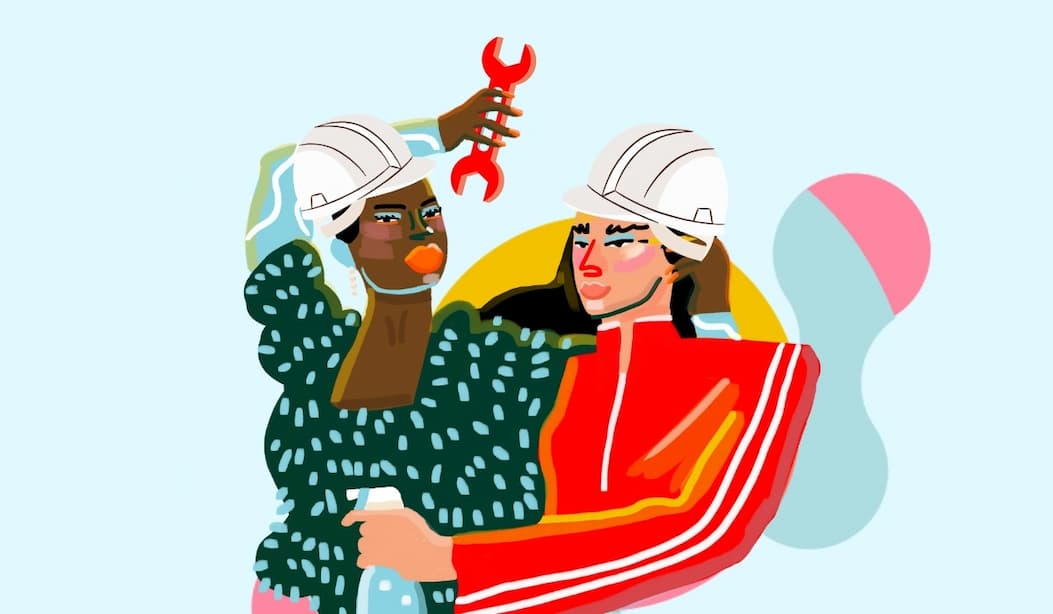
The People Not Off Today
When I worked at Unilever, I started in supply chain as a Distribution Services Analyst. It was the unsexiest job I’ve ever had. While I learned a lot, it was a bad fit for me. Each quarter, some lower-level employee (read: me) had to work through midnight to ensure our numbers came in from all of our distribution centers. We were tracking SAP and other tools to figure out, literally, how much Ben and Jerry’s and margarine went from the manufacturing centers, to the distribution centers, to the Walgreens and Publix’s of the world. One December 31st I was tasked with tracking this, and I will never forget the moment it dawned on me that there are millions of people who have to continue to work even when there are holidays. This is not a sob story about myself, in fact, it’s pathetic I made it through graduate school without realizing this is a real thing.
Anyway, Labor day is coming up. Congratulations if you have Monday off! A lot of people don’t. About 1.2 million people are hired onto U.S. crop and livestock operations in a given year, and millions more move through the industry seasonally once you count family labor and the self-employed. Delivery drivers are still running routes today. Somebody is standing at a sorting line right now, pulling your recycling apart by hand. A lot of the people keeping things running, including the "sustainable" systems we like to talk about, don't get the day off, and that's kind of the whole point of the holiday.
Labor Day became a federal holiday in 1894, and the timing tells you most of what you need to know about why. That spring, the Pullman Palace Car Company, which built luxury railway sleeper cars and owned the entire company town outside Chicago where its workers lived, cut wages by roughly 25 percent after a recession hit profits. It left rents on the company housing exactly where they were. Prices at the company stores didn't move either. Workers walked out in May, and Eugene Debs and the American Railway Union turned it into a sympathy boycott. It spread to 27 states and pulled in somewhere between 125,000 and 250,000 workers. Rail traffic west of Chicago basically stopped.
The government answered with federal troops. Roughly 30 workers were dead by the time it ended in late July, and millions of dollars in railroad property was gone with it. Debs went to prison; the case against him leaned on the Sherman Antitrust Act, a law written to break up corporate monopolies, to break up a union instead. Six days after the strike was crushed, Congress passed the bill creating a national Labor Day, and Cleveland signed it. It reads like a government trying to buy back some goodwill from a labor movement it had just crushed by force.
The same shape keeps showing up. In February 1968, two Memphis sanitation workers, Echol Cole and Robert Walker, were crushed to death by a malfunctioning garbage truck they'd climbed into to get out of a storm, because the city gave its Black sanitation workers no other place to shelter and no workers' comp to speak of. Thirteen hundred walked off the job. Their signs said "I Am A Man." That strike gets taught now as one of the founding moments of environmental justice, and nobody involved was talking about emissions. They were pointing out something that's held up ever since: the people handling a city's waste and the people breathing its pollution tend to be the exact same people.
North Carolina made the point again in 1982, when the state picked a majority Black, majority low-income county, Warren County, as the dump site for soil contaminated with PCBs. Over 500 people were arrested lying in the road trying to stop the trucks. They lost. The landfill went in anyway. Historians point to that protest as the moment the environmental justice movement got its name.
Given what I spend my time doing (trying to figure out what actually earns the label "sustainable"), I’m spending a lot of time thinking about this. A lot of the supply chains behind that label still run on labor most people never see. Somebody sewed the organic cotton. Somebody sorted your recycling by hand, and a lot of the world's recycling never touches a municipal system at all. Something like 20 million people worldwide work as informal waste pickers, collecting and reselling recyclable material with no formal employment status and no protective gear. Some estimates put their share of all the plastic that actually gets recycled globally at close to 60 percent. The circular economy, as it currently runs, depends heavily on labor that never makes it into anyone's sustainability report.
So, please sit with one question if you've got the day off: when you decide something's sustainable, are you counting the people who made it? A product's carbon footprint and its labor footprint are really the same measurement. This holiday was built, in part, so we wouldn't have to check it.
Subscribe now to continue reading.
(16% discount)
• Access to unlimited articles
• Sustainable product guides & recommendations
• Weekly newsletters
Already a member? Log in.