Real vs. Artificial Christmas Trees (and Everything Else in the Living Room)

Every year, people assume the artificial tree is the green choice because nothing gets cut down. It usually isn't. Here's how to choose the tree, the lights, and the decor, and what to do with all of it in January.
Do first: LED lights on a timer, and a real tree from a local farm (or keep the artificial one you already own for 10+ years). Only when it fits: a living potted tree, and replacing old decorations only when they break.
Real vs. artificial: it depends how long you keep it
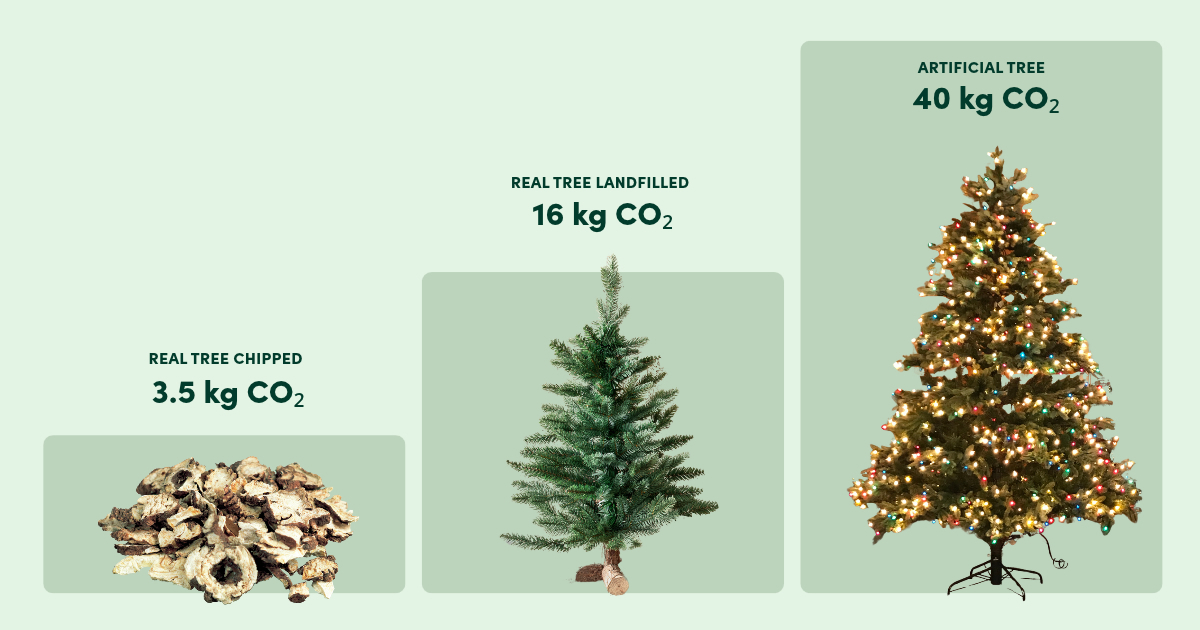
Real trees: a farmed real tree has a carbon footprint of about 3.5 kg CO₂ if it's chipped or burned for energy after Christmas, but about 16 kg if it goes to landfill, where it rots without oxygen and releases methane. While it grows, it absorbs carbon, provides habitat, and holds soil in place, and growers plant one to three seedlings for every tree cut. Christmas trees are a farmed crop, not deforestation.
Artificial trees: a typical 2-meter (6.5-foot) artificial tree has a footprint of about 40 kg CO₂, more than ten times a real tree that's chipped or burned. Most are made from PVC (made from petroleum) on a metal frame, shipped from overseas, and almost impossible to recycle.
The break-even: how long you need to keep an artificial tree to beat buying a real one every year depends on who did the math. The Carbon Trust puts it at 10 to 20 years. A study commissioned by the artificial-tree industry's own trade group puts it at about 5 years (it didn't count the carbon stored in a farmed tree's roots, which stay in the ground). Either way, an artificial tree only comes out ahead if you keep it for many years.
So which one wins?
- Already own an artificial tree? Keep using it for as long as it lasts. That's the sustainable choice now.
- Buying new? A real tree from a local farm, recycled after the holidays, is the lower-impact choice for most people.
- Want artificial anyway? Buy one secondhand, and commit to it for 10+ years.
A note on older artificial trees: studies in the 2000s found lead in the PVC of some older artificial trees and garlands, which can rub off as the plastic ages. Newer trees mostly use other stabilizers. If your tree is from the 2000s or earlier, wash your hands after handling it and keep little kids from chewing on it.
Buying a real tree well
- Buy local: a nearby tree farm or a choose-and-cut farm (a great family experience on its own).
- Ask about pesticides, or look for an organic tree farm near you.
- Skip flocked trees. The fake snow makes them hard or impossible to mulch or compost.
- Living potted trees can be replanted after the holidays, but only if you have the yard, the right climate, and keep the tree indoors for no more than about 10 days. Some cities have living tree rental services that pick the tree up and replant or re-pot it.
Keeping it alive (and safe)
- Cut a fresh half-inch off the base before you put it in the stand.
- Water it every day. A tree can drink a quart or more per inch of trunk diameter in the first days.
- Keep it away from heat vents, fireplaces, and candles. A dried-out tree is a real fire hazard.
- Turn the lights off when you leave the house or go to bed (a timer does this for you).
If you go artificial
- Buy secondhand (Facebook Marketplace, Buy Nothing groups, thrift stores after the holidays).
- Store it in a dry place, in a bag or box, to make it last.
- At the end of its life: give it away if it still works; otherwise, check whether scrap metal recyclers take the frame.
Wreaths and garland
Real wreaths are made from trimmed branch tips, which actually encourages trees to grow. They're renewable and compostable (remove wire frames and ribbon first). Artificial wreaths follow the same rule as artificial trees: only worth it if you keep them for years.
Lights
- Switch to LED. LED holiday lights use at least 75% less energy than incandescent strands and last up to 25 times longer (US Department of Energy). Old incandescent strands are worth replacing, especially the ones you run for hours a day.
- Put them on a timer. Six hours an evening, not all night.
- Solar strands work well for outdoor displays in sunny places.
- Inflatables run a fan the whole time they're up. Fine if you love them, but put them on the timer too.
- Broken strands: don't trash them. Many hardware and home stores and scrap metal recyclers take old light strands for their copper.
Shop:
- LED string lights: Christmas Designers T5 LED Lights, Wintergreen Lighting LED Christmas Lights; look for the Energy Star label
- Outdoor light timer / smart plug: Kasa Smart Outdoor Plug
- Solar string lights: Brightech Ambience Pro Solar String Lights

Ornaments, candles, and decor
- Ornaments: glass, wood, felt, wool, and secondhand. Swap with friends instead of buying new. Tinsel is plastic, and it makes the tree harder to recycle.
- Garlands that compost: dried orange slices, popcorn and cranberry strings, cinnamon sticks, fresh greens.
- Menorah candles: beeswax instead of paraffin, or an olive-oil menorah, the historical original.
- Kwanzaa kinara candles: the same beeswax swap.
- Scented holiday candles are usually paraffin with synthetic fragrance. Beeswax or unscented soy is better. (See our candle guide.)
- Fire starters: make your own by dipping pinecones in melted beeswax or leftover candle wax. They also make a great small gift.
Shop:
- Beeswax candles: Bluecorn Botanica Beeswax Candle, or Living Good Candle Co. Beeswax Candle
- Unscented beeswax candles: Alysia Mazzella Beeswax Tapers, Beehive Alchemy Beeswax Tapers, Big Dipper Wax Works beeswax pillars
- Hanukkah: Big Dipper Wax Works Natural Beeswax Hanukkah Candles; Keraclay Stoneware Menorah Set
- Wood, glass, or felt ornaments: Ten Thousand Villages (fair trade), Global Goods Partners felt ornaments, vintage glass ornaments from Etsy
Advent calendars
A reusable fabric or wooden calendar you fill yourself beats the plastic-tray kind that gets thrown out on Dec 25.
Shop: a wooden or fabric advent calendar from Etsy that you refill every year
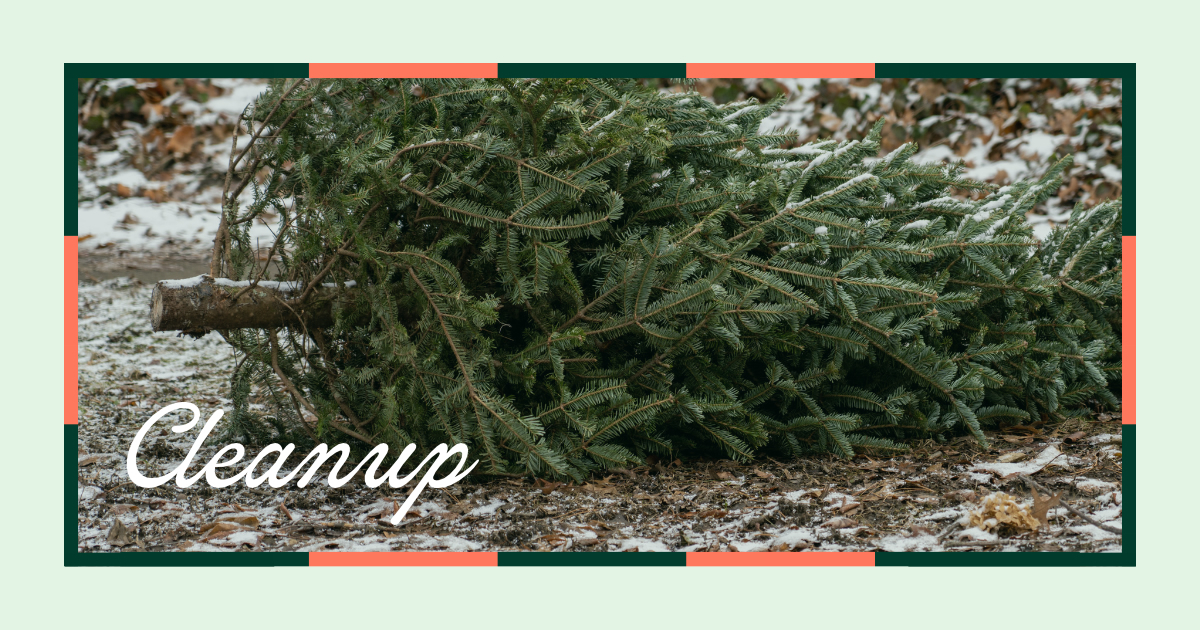
Getting rid of the tree
Most curbside pickups run from late December through mid-January, often timed around Three Kings Day (Jan 6) and Orthodox Christmas (Jan 7). Best to worst:
- Curbside "treecycling." Many cities pick up trees in early January and chip them into mulch or compost. Remove every decoration, light, hook, bit of tinsel, and the stand.
- Drop-off mulching programs. Parks departments, garden centers, and transfer stations often run drop-off sites, and some let you take mulch home for spring.
- Your yard. Cut branches to mulch garden beds over winter, or make a brush pile for birds and small animals. The trunk can edge a garden bed.
- Habitat programs. Some state wildlife agencies sink old trees in lakes and ponds as fish habitat.
- Last resort: the landfill. That's where a tree's footprint quadruples.
Don't burn it in the fireplace. Fresh evergreen sap builds up as creosote in the chimney, and dry needles flare up fast.
Packing it all away
Store decor so it lasts: wrap glass ornaments, coil lights around cardboard, and keep everything dry.
More from the Finch Holiday Guide
Store decor so it lasts: wrap glass ornaments, coil lights around cardboard, and keep everything dry. Leaving town before the lights come down? See How to travel with a smaller footprint.
Subscribe now to continue reading.
(16% discount)
• Access to unlimited articles
• Sustainable product guides & recommendations
• Weekly newsletters
Already a member? Log in.