


Reduce, Reuse, Recirculate


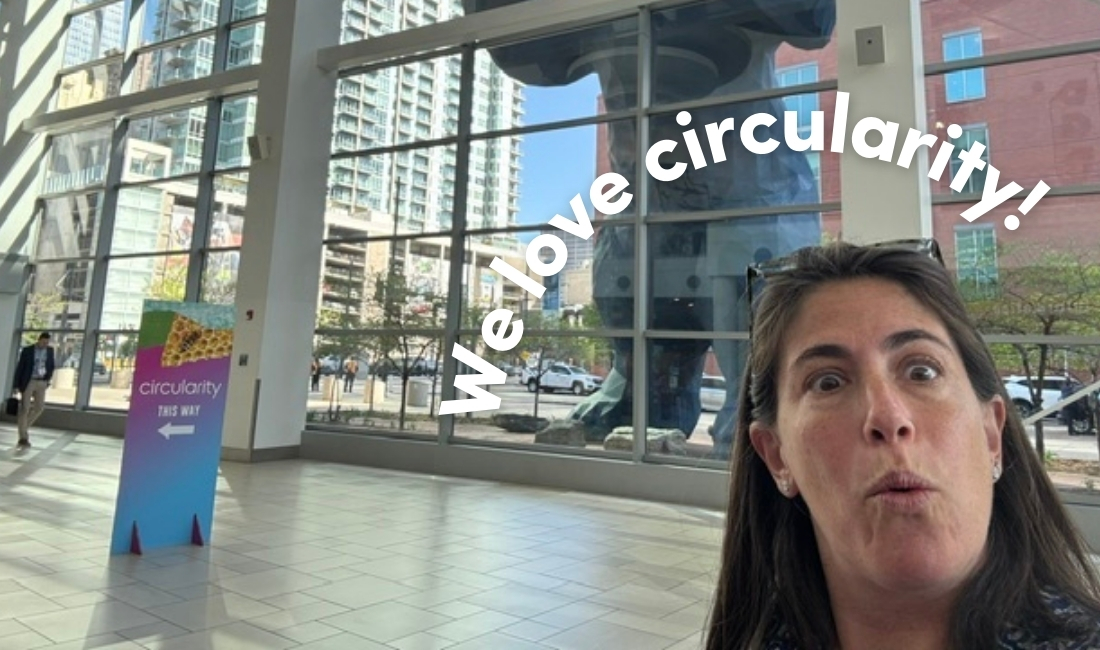
Last week, I had the distinct pleasure of attending the Trellis (formerly known as GreenBiz) Circularity 2025 Conference. I hadn’t been to a conference like this in several years and was eager to reconnect with old friends, classmates and colleagues and hear about some of the largest innovations happening in the space.
First, what even is circularity?
So glad you asked (and if you’re well-versed and just want to get to the conference takeaways, feel free to skip this part). The circular economy is a concept that essentially rethinks how we deal with physical goods. Traditionally, our economy has followed a linear path: we take natural resources, make products, use them, and then throw them away - often into landfills or incinerators. The circular economy flips that model by designing waste out of the system: instead of discarding something after use, circular systems prioritize reuse, repair, refurbishment and recycling. The idea is to keep materials in use for as long as possible, extract the maximum value from them, and regenerate natural systems rather than deplete them. The actual term “circular economy” gained traction in the 2010s, boosted by organizations like Cradle2Cradle and the Ellen MacArthur Foundation (which co-hosted the Circularity conference).
The thing I love most about the circular economy is that unlike so many other environmental issues where the biggest argument is about doing the right thing on behalf of humanity, thinking more circularly is better for business. This should be no surprise - reusing a material or product is almost always cheaper than making it new. So when this comes up in board rooms and senior leadership meetings, it’s an easy(er) sell than a lot of other sustainability initiatives.
Without further ado, here are some themes I gathered:
1) Pilot is a bad word
The circular economy has matured - it’s no longer about small pilots, but about scalable, operational models that drive systemic change. Iterative programs and demonstrations of value almost always beat out pilots - only scalable models that move into implementation will shift systems. I absolutely loved this. Any large company can prioritize a 30-day pilot if for nothing else than to get good PR, but to truly show your commitment, it’s important to commit to projects that actually have a chance at becoming embedded into everyday operations.
2) Data is infrastructure
Digital Product Passports and traceability tools are becoming essential for enabling circular systems across fashion, batteries, and electronics.
Hold up - what is a Digital Product Passport? It’s a digital record that tracks a product’s lifecycle, from material sourcing to end-of-life, offering transparency and detailed information about its origin, manufacturing process and environmental impact. Essentially, this is a “digital identity” for a product through a QR code or RFID tag permanently linked to the product. This is something so innovative that not even the Jetsons had it on their radar screen.
The European Union is at the forefront of implementing DPPs through the Ecodesign for Sustainable Products Regulation (ESPR), which mandates that nearly all products sold in the EU feature a DPP, with full implementation expected by 2030. The EU is always a bit ahead with these types of things, so we expect this to hit the US in…5-55 years.
3) Design for Circularity
Repairability, reuse and disassembly are no longer optional - product design most prioritize longevity and material recovery from the start. Obvious but worth noting - companies are having an increasingly difficult time getting away with a take-make-waste approach. In the keynote on the first day of the conference, Bill McDonough, author and founder of Cradle to Cradle, gave an analogy that resonated with anyone who has been around young kids before. “Being less bad,” he said, “still doesn’t mean good.” He said imagine telling your toddler to just be less bad. I wondered if this interfered with my strong belief in progress not perfection, but I appreciate that his point has more to do with designing smartly from the beginning when making new products. He said, “Let’s not design for end of life but instead for end of use - and think about what the next use case is?”
4) Collaboration Is Critical
Industry-wide progress hinges on cross-sector partnerships, shared infrastructure and coalitions that move from talk to tangible results. Partnerships like the NextGen Consortium are examples that have proven successful and we’ll see a lot more of. This isn’t a race to the moon type of thing, and getting there faster by working together is the play.
5) Policy and Responsibility
EPR (Extended Producer Responsibility) is gaining traction globally, demanding adaptability from businesses and offering a path to lead through compliance and innovation. EPR holds manufacturers accountable for the entire lifecycle of their product, especially their end-of-life impact. So that Diet Coke you bought for an afternoon pick-me-up? EPR policies would argue that how you dispose of it should be the responsibility of Coca-Cola. They’re mostly enacted at the state level, and there are currently four states that have a packaging and paper products EPR standard: Maine, Oregon, Colorado, and California.
Many states are currently exploring EPR expansions to cover textiles, carpets and solar panels, and there’s growing alignment with international models to influence US policy frameworks. Companies like Coca-Cola, Nestlé and Amcor are part of the EPR Leadership Forum, which has backed EPR legislation previously, but other companies like Kraft Heinz (love your ketchup and mac & cheese, hate your policies) have expressed significant reservations about EPR legislation.
Subscribe now to continue reading.
(16% discount)
• Access to unlimited articles
• Sustainable product guides & recommendations
• Weekly newsletters
Already a member? Log in.


