


The True Impacts of Online Vs. In-Person Shopping


It’s no secret that America loves online shopping. With e-commerce sales claiming an increasingly large portion of total U.S. retail sales, lots of people are beginning to worry about the environmental impacts of this activity. Below, we’ve outlined the true impacts of online vs. in-person shopping. Spoiler alert: On average, online shopping has a lower carbon footprint than in-person shopping.
The following data is based on Dimitri Weideli’s 2013 MIT thesis in which they used the Monte Carlo simulation to determine each type of shopper’s carbon footprint when buying a toy in an urban area.
In-person shopping:
In-person shopping has three main carbon-intensive steps, listed below from most to least environmentally damaging.
- Customer transportation, aka how you’re getting to the store
- The impact of the brick and mortar store
- Packaging
Online shopping:
Online shopping has four main carbon-intensive steps, listed below from most to least environmentally damaging.
- Packaging, since individually wrapped items require much more material than items packaged in bulk.
- Transportation, which is much higher if a customer chooses overnight or two-day shipping, since those options almost always require putting the item on an airplane.
- Parcel delivery is another impact, and it’s defined as the “last mile” of shipping. Though both parcel delivery and customer transportation move the item to the customer’s home, parcel delivery has a much smaller impact because of optimized delivery processes.
- Finally, computer use, aka the electricity consumed by a shopper using a personal computer to shop online, and data center use.
The Ten Types of Shoppers
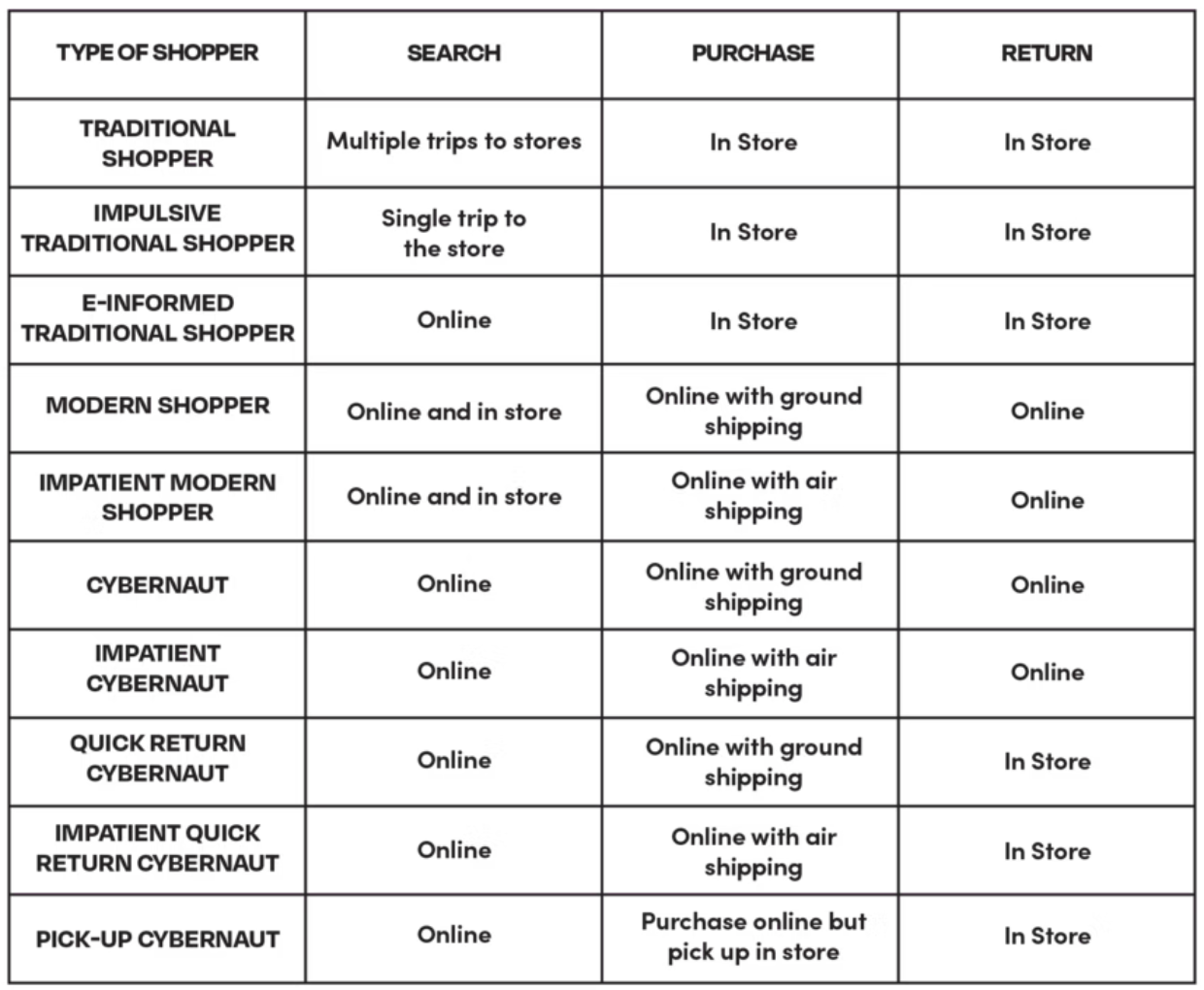
Below is a grid containing the different possible behaviors based on the various ways in which people search for, purchase, and return products. These behaviors make up ten kinds of shoppers.
How it all comes together
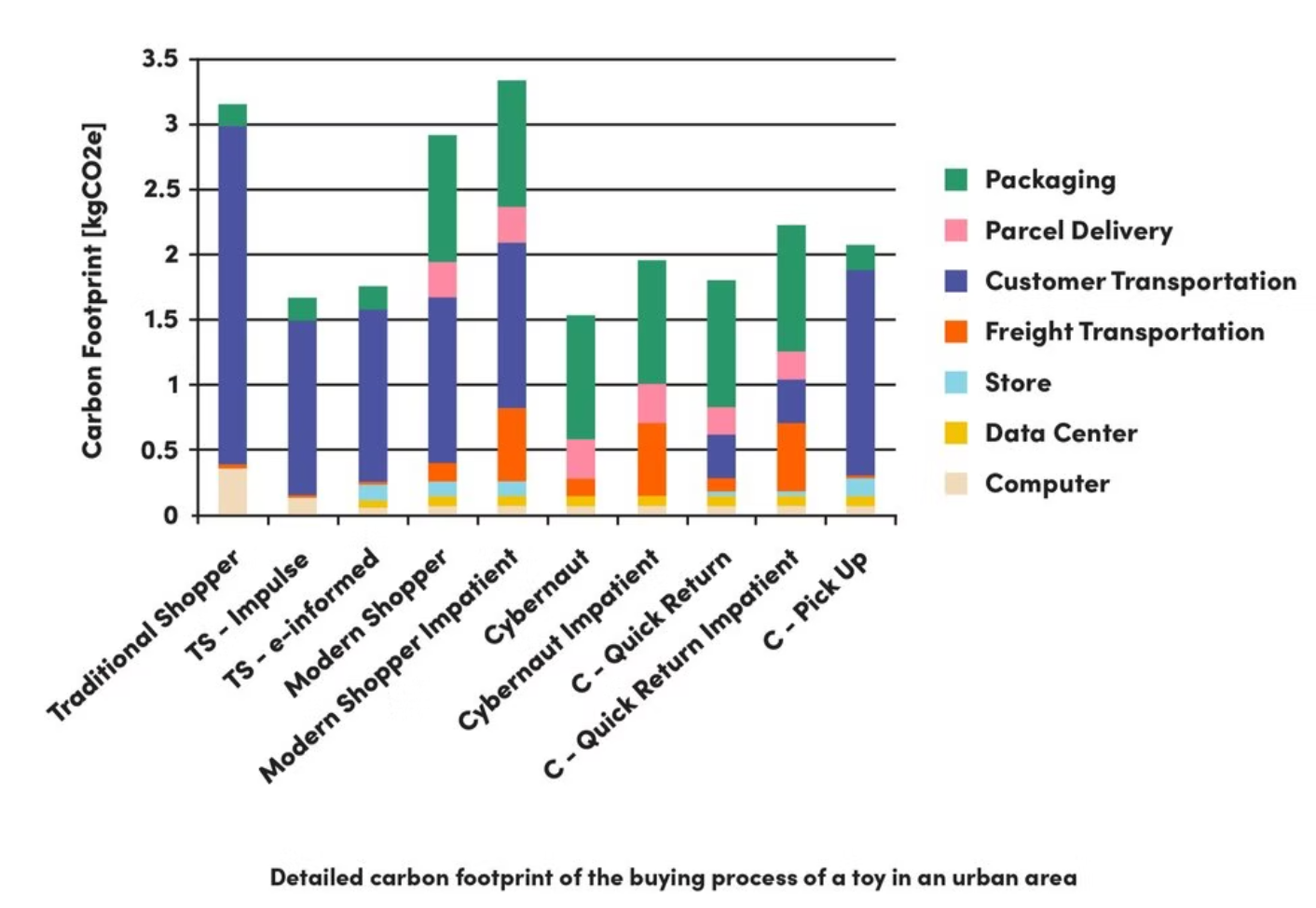
According to Weideli’s assessment, the Impatient Modern Shopper has the highest carbon footprint of all. After all, they are responsible for the impacts of both online and in-person shopping, including customer transportation and the store (driving to and spending time in the store), computer use and data center use (online browsing), online packaging (higher footprint than in-person packaging), freight transportation (with air shipping), and parcel delivery.
The Traditional Shopper has the second-highest carbon footprint, almost entirely due to customer transportation, because they’re making multiple trips to stores. However, that also means that if a shopper is able to walk or take public transportation to the store instead of driving, this is the least carbon intensive way to shop.
Meanwhile, the Cybernaut has the lowest carbon footprint of all of the shoppers. That’s right -- on average, browsing for, buying, and returning an item online is the least carbon intensive way to shop.
Subscribe now to continue reading.
(16% discount)
• Access to unlimited articles
• Sustainable product guides & recommendations
• Weekly newsletters
Already a member? Log in.


