


Your Sunscreen Has a Dirty Little Secret


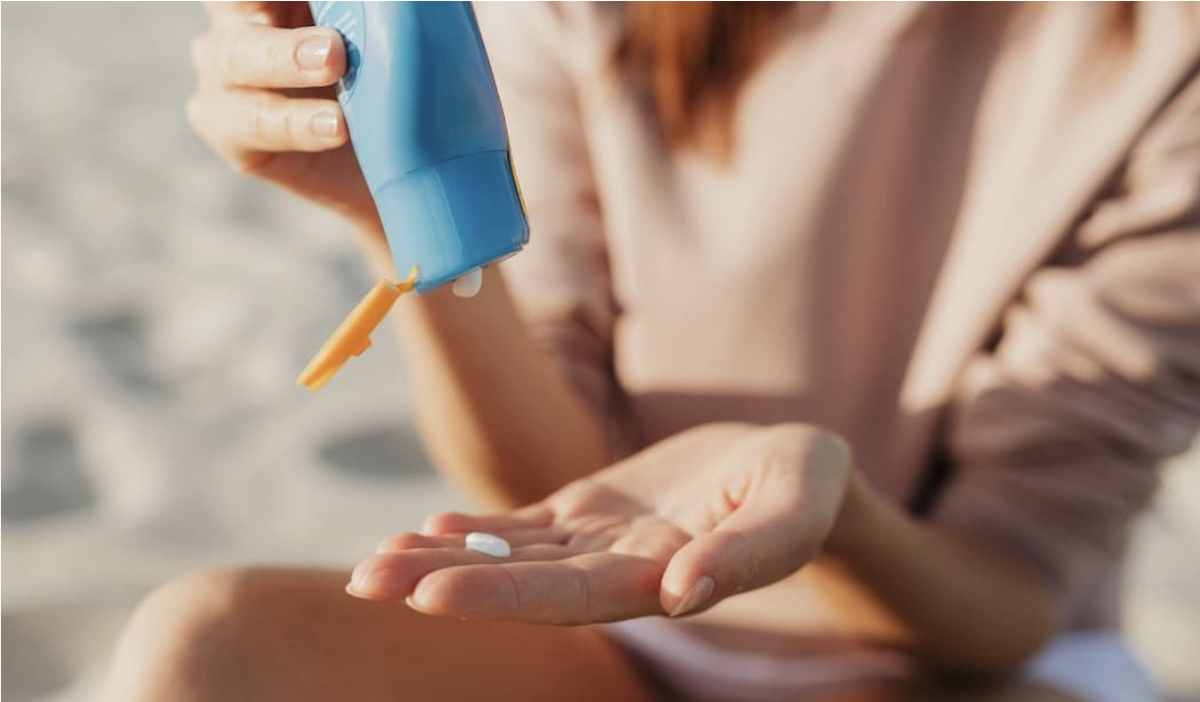
Your Sunscreen Has a Dirty Little Secret
It is peak sunscreen season, which means longer days, more reasons to be outside, and a golden opportunity to look more closely at what you are actually putting on your skin and washing into the ocean.
Here is a fun fact that should probably be more alarming than it is: you were watching the Sopranos and partying like it’s 1999 the last time the FDA meaningfully updated its sunscreen regulations. Yes, 1999. It’s also, apparently, the last time our government felt confident enough about what goes in sunscreen to officially sign off on anything new. Until last week!
In the US, sunscreen is regulated as an over-the-counter drug, which sounds like a rigorous thing until you realize it means every new ingredient has to go through the same lengthy approval process as a pharmaceutical. Europe classifies sunscreen as a cosmetic, more like a moisturizer than a medication. The result: Europe has approved 34 UV filters. The US has approved 16, with essentially no changes in 25 years. Let’s be specific about what that gap means: the EU has access to modern UV filters like Tinosorb S and Tinosorb M, which offer stronger, more stable UVA protection and better safety profiles than many American equivalents. In the US, despite the millions of brands on our American shelves, only two approved ingredients offer strong UVA protection: zinc oxide and avobenzone. Everything else is working with considerably less. There is now an entire corner of the internet dedicated to people smuggling better sunscreen home from European and Asian vacations. A bronzed opportunity, if you will.
Have your eyes glazed over yet? Don’t worry, there’s some good news. In December 2025, the FDA proposed adding bemotrizinol as a new active ingredient, which would be the first addition since 1999. It offers broad-spectrum UVA and UVB protection, has low skin absorption, and has been widely used in Europe and Asia for years. Just a few weeks ago, the FDA cleared it, allowing US companies to start using the more “cosmetically elegant” ingredient in their own products. Bemotrizinol is better for sensitive skin, has a lower risk of causing irritation, and can last longer in the sun without breaking down. This is a win all around.
Meanwhile, In Hawaii
While Washington was not updating sunscreen regulations for two and a half decades, Hawaii was dealing with a more immediate problem: its coral reefs were dying, and sunscreen was partly to blame.
Two of the most common chemical UV filters in American sunscreen, oxybenzone and octinoxate, have been shown to cause coral bleaching, genetic damage to marine organisms, and reproductive disruption in fish and other sea life. An estimated 14,000 tons of sunscreen enter ocean waters around coral reefs every year. At Hanauma Bay, Oahu’s most popular snorkeling spot, 412 pounds of sunscreen wash off swimmers daily. Per day.
In 2018, Hawaii passed the first statewide ban on sunscreens containing these two chemicals, effective January 1, 2021. Maui County went further in 2022, banning all non-mineral sunscreen entirely. The chemicals are still fully FDA-approved. You can buy them at any Target in any other state in America. You just cannot sell them in Hawaii.
The American Academy of Dermatology pushed back, arguing the ban could increase skin cancer rates in a state with high UV exposure, which raises an uncomfortable question: if these ingredients are potentially harmful to marine ecosystems and possibly to humans at absorbed levels, why are they still the default in most American sunscreens? The answer, again, is 1999.
What “Reef-Safe” Actually Means
Here is the practical upshot: “reef-safe” is not a regulated term in the US. It is a marketing claim. Anyone can put it on a label. There is no certification body, no standard, no enforcement.
What you are actually looking for are mineral sunscreens that use non-nano zinc oxide or titanium dioxide as the active ingredients. These sit on top of skin rather than absorbing into it, do not penetrate waterways the same way, and are the formulations Hawaii’s ban was designed to push people toward.
The knock on mineral sunscreens has historically been that they leave a white cast and feel thick, which is a real usability issue that affects whether people actually wear enough. Formulations have gotten significantly better. A sunscreen you do not use is worse than an imperfect one you do. Check out our full sunscreen guide and our baby sunscreen guide for the specific products we stand behind.
Subscribe now to continue reading.
(16% discount)
• Access to unlimited articles
• Sustainable product guides & recommendations
• Weekly newsletters
Already a member? Log in.