


Linen: The Sequel Nobody Saw Coming


The Rule Outlived the Industry
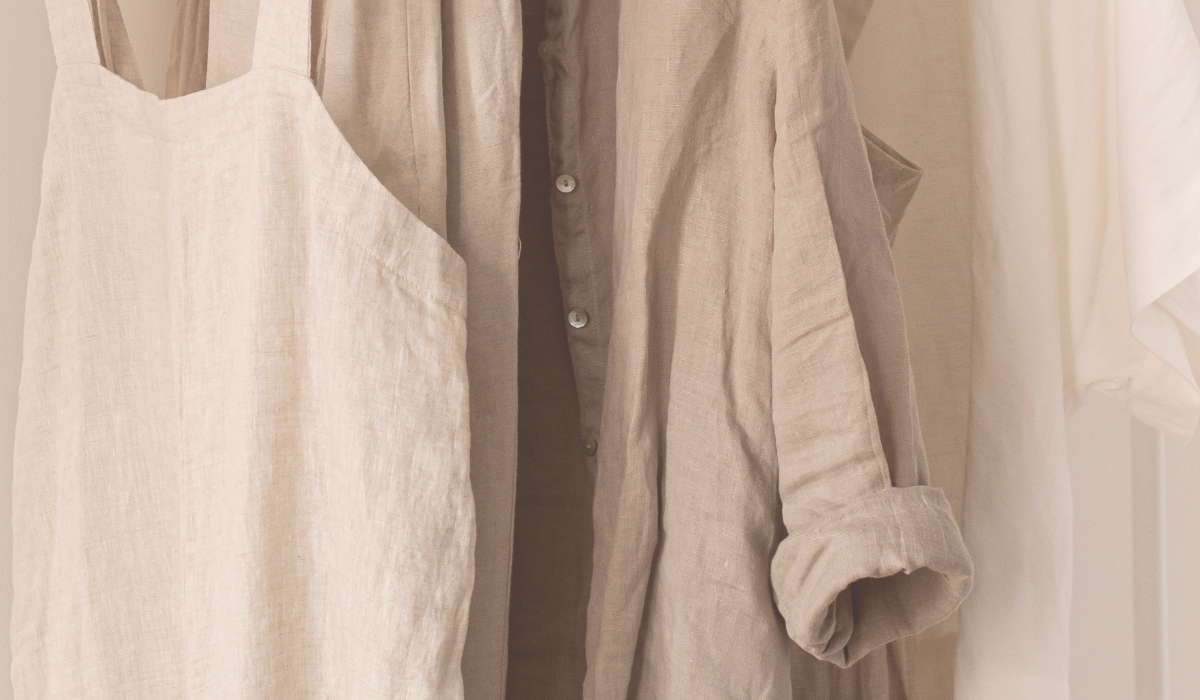
Growing up, there were rules in my house about clothing, courtesy of Emily Post by way of my mom. White was for Memorial Day through Labor Day, and linen was strictly a summer fabric. These were not suggestions. I followed them dutifully for years, feeling vaguely superior at Labor Day cookouts while putting my linen pants away until the following June. I was genuinely delighted to learn that Emily Post has since updated its guidance to allow for winter whites and year-round linen. Thrilling.
What nobody told me, and what I find genuinely fascinating, is that while we were all carefully observing the etiquette around linen, the American linen industry had already quietly ceased to exist. The rule outlived the industry by decades. We kept the dress code and lost the fabric.
How America Lost Linen
Linen was the most commonly used textile in the United States until the invention of the cotton gin in 1794. Before that, it was everywhere. Colonial-era families grew their own flax, processed it by hand, spun the yarn, and wove the cloth themselves. Textile production was a point of pride, and linen was the backbone of it. The cotton gin changed everything. Cotton production in the United States doubled each decade from 1800, quickly overtaking linen as the cheap everyday fabric. By the mid-1800s, most small American farms had stopped growing or processing flax entirely. The decline accelerated as cotton's cheaper prices, driven by the labor of enslaved people, made linen increasingly uncompetitive.
The final chapter came in the 20th century. In 1942, Oregon alone harvested 37,000 tons of flax, processed across 14 mills in the region. By 1951 that had dropped to 3,400 tons and four mills had already closed. Linen production in the United States faded out entirely by the 1960s. There are now zero linen mills in America. Today, 80% of the world's flax fiber is grown in Western Europe, primarily France, Belgium, and the Netherlands, where it has been cultivated in the same river valleys for centuries. The linen shirt you bought at Mango or Zara last summer almost certainly began its life in a Belgian field and traveled through a European mill before arriving at a distribution center and then your closet.
Why This Actually Matters
If linen had just been replaced by something equally good, this would be a mildly interesting historical footnote, but cotton replaced it.
Cotton production requires an average of 10,000 liters of water to produce one kilogram of fiber. Flax requires around 1,000 liters for the same amount. Linen production also generates around five times fewer greenhouse gas emissions than polyester, and one hectare of flax actively captures 3.7 tonnes of CO2 per year. It doesn't just pollute less. It sequesters carbon while it grows.
Linen uses significantly less water and pesticides than cotton, requires no irrigation in most European growing regions because it thrives on natural rainfall, and is fully biodegradable at end of life. Polyester, which now makes up about 60% of the global textile market, is derived from petroleum, sheds microplastics with every wash, and takes hundreds of years to break down. We traded one of the most sustainable fabrics in the world for one of the least, and we did it gradually enough that it barely registered.
What You Can Do With This
Linen is having a genuine moment right now, and not just because it photographs well on vacation. Consumer demand for natural fabrics has pushed linen back into mainstream retail in a way it hasn't been in decades. The supply chain is still almost entirely European, which means your linen shirt has a longer journey to reach you than a domestically made cotton one, but the overall environmental calculus still favors it heavily over polyester or conventionally grown cotton.
There are small but serious efforts underway to revive American flax. The North American Linen Association was established in 2022, and operations in Oregon's Willamette Valley and California's Sacramento Valley are working on regenerative growing and processing systems. It's early and small scale, but the infrastructure that disappeared over 60 years doesn't come back overnight.
In the meantime, when you're shopping for summer pieces, linen is one of the genuinely good answers. Wear it after Labor Day. Emily Post says it's fine now.
Subscribe now to continue reading.
(16% discount)
• Access to unlimited articles
• Sustainable product guides & recommendations
• Weekly newsletters
Already a member? Log in.