

The Barefoot-Adjacent Emergency Plan


In my second year of graduate school, I was fortunate enough to take a course called Managing Global Catastrophes. This was one of the most popular courses at Yale School of Management, not necessarily because of its content, but because it was taught by none other than Jeffrey Garten, Ina's loving husband. THE roast chicken connoisseur, Jeffrey. The course had nothing to do with my subject focus and I wasn't necessarily interested in it, but I wanted to be one degree closer to Ina. It did not work. I still feel as distant from Ina as I did in January of 2015, but I did learn a lot from the course.
One thing I remember clearly from that class: disaster response only works when federal, state, and local systems actually talk to each other. Right now, that’s not really happening. Since taking office, the Trump administration has pushed the biggest overhaul of FEMA in a generation, and a Trump-appointed review council just approved a final report recommending the agency shift most disaster response and recovery responsibility onto states, shrink FEMA's workforce roughly in half compared to the end of the Biden administration, and raise the damage threshold required for a state to even qualify for federal disaster aid.
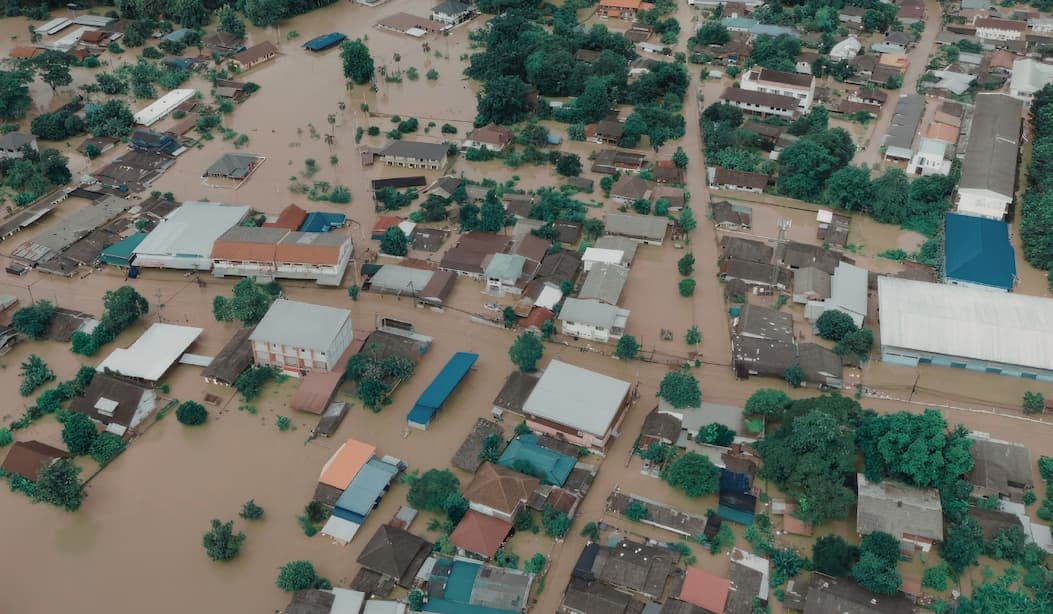
This means that if your state gets hit by a hurricane, wildfire, or flood, there's now a real chance you're on your own faster and for more of the bill than you would have been a few years ago. This isn't a partisan gripe, it's just useful context for why "personal preparedness" carries more weight this September than it used to. See also: why the climate vulnerability index is more than a little flawed.
Federal disaster aid is getting harder to access and slower to arrive, which makes individual and household preparedness less of a nice-to-have and more of a real safety net.
The Environmental Bill Nobody Talks About
We tend to think of natural disasters as environmental events that happen to us, but they also generate a massive amount of environmental damage on the back end. When a hurricane, earthquake, or wildfire destroys buildings and infrastructure, all of that debris has to go somewhere, and most of it still ends up landfilled rather than reused. Methane released from landfilled disaster debris (wood, food, organic material) is over 25 times more potent than CO2, and the rebuilding that follows is its own carbon problem: cement alone accounts for roughly 6 to 8% of global CO2 emissions, and disaster-driven reconstruction spikes demand for it in short, intense bursts.
There's also some irony here: some of the deadliest disasters in recent memory have made their own regions harder to rebuild sustainably, because emergency-speed construction rarely has room for the kind of careful material sourcing you'd otherwise use.
None of this is a reason to feel guilty about disasters you didn't cause, but it's useful to know that the aftermath of a disaster has an environmental cost too, which is exactly why the products you stockpile for your own household matter more than you'd think.
FEATURE
Your Emergency Kit Doesn't Have to Look Like a FEMA Warehouse
Only about 5% of American homes report having a fully stocked emergency kit, and one in five have none of the recommended supplies at all. Meanwhile, FEMA's own research shows the households that do prepare often don't go deep enough. Most people's kits, if they exist, are that dusty bag of expired granola bars and a flashlight with no batteries shoved in a basement closet.
The good news is that "sustainable" and "prepared" aren't in tension the way you'd expect. A few principles if you're building or upgrading a kit this month:
- Buy rechargeable, not single-use. A hand-crank or solar-powered radio and flashlight beats a pile of disposable batteries that leak and get tossed. Look for kits with a built-in dynamo crank so you're not relying on battery shelf life at all.
- Skip the individually wrapped everything. Bulk water pouches and food rations with 5-year shelf lives cut down on the plastic waste that a "just in case, buy extra" mentality tends to generate.
- Reusable over disposable, even under stress. A stainless or hard-shell water bottle instead of a flat of plastic bottles, cloth instead of paper towels where possible.
- Don't over-buy "just in case." The most wasteful emergency kit is the one you built out of panic and never rotate or use, so things expire and get thrown out unopened. Set a calendar reminder to check expiration dates twice a year.
Subscribe now to continue reading.
(16% discount)
• Access to unlimited articles
• Sustainable product guides & recommendations
• Weekly newsletters
Already a member? Log in.