


How Ground Zero Cleanup Changed Building Materials


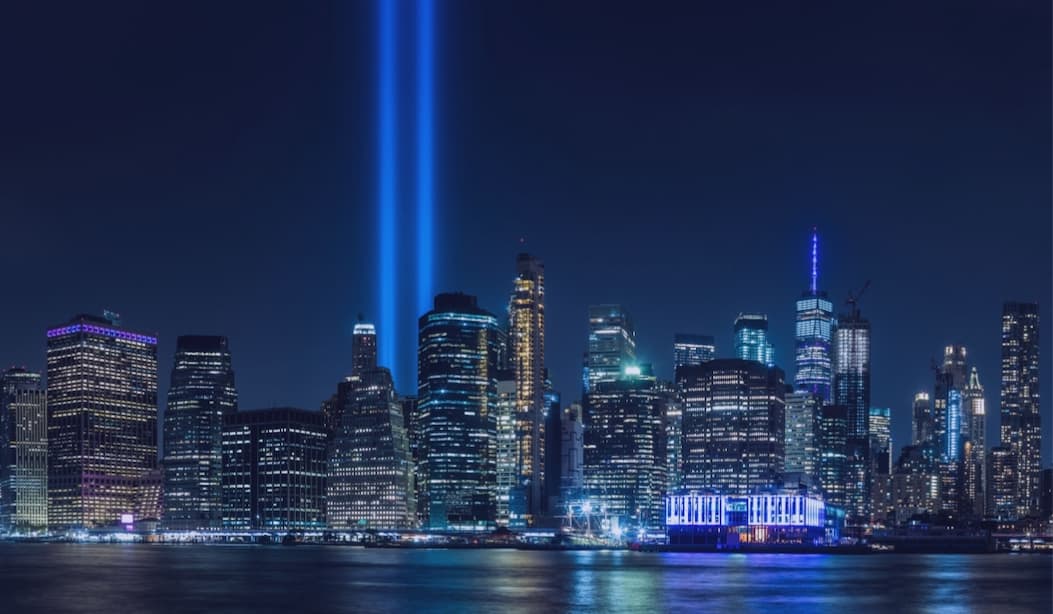
If you open my parents’ freezer, you’ll mostly see what you’d expect from two 70-somethings: Graeter’s Ice Cream, Hebrew National Hot Dogs, and bread. But there’s one thing that’s been sitting there untouched for 25 years: banana bread, wrapped in plastic wrap with a purple ribbon on it.
It was given to my parents by Neil Levin. Neil was the head of the Port Authority of New York and New Jersey, and he and his wife, Christy, had become great friends of my parents. They knew each other from Martha’s Vineyard, and whenever Neil would fly up from New York, he would bring my parents Krispy Kreme donuts.
For whatever reason, in late August 2001, he gave my parents banana bread.
Just two short weeks later, he died in the September 11th attacks, and they’ve never been able to bring themselves to eat it or, at this point, throw it away. Each time one of us opens the freezer, we’re reminded of Neil and his legacy, which went way beyond good taste in treats.
Many of you, like me, will have a story similar to this about how 9/11 continues to show up in the most unexpected of ways, in banana bread or otherwise. I’m thinking of everyone impacted by the tragedy this week.
Every anniversary of September 11th, we return to the same handful of stories: where you were, what you saw, who didn’t come home.
Twenty-five years out, aside from the billions of stories and takeaways from that horrific day, there’s another story running underneath. There’s the environmental and human health impact and the physical stuff those towers were made of, what happened to those materials when the buildings fell, and how that single collapse ended up rewriting the rules for how tall buildings get built in this country.
Almost nobody talks about it, and I’d like to attempt to explain it.
A tower built across a fault line
Construction on the World Trade Center began in 1966. The Twin Towers used a novel “tube frame” design: a strong perimeter of closely spaced steel columns doing much of the structural work, with lightweight floor trusses inside instead of the heavier structural systems common in earlier skyscrapers. That design helped make the towers extraordinarily tall and efficient, and fireproofing critical.
The towers depended on spray-applied fire-resistant material to protect their steel from the extreme heat of a fire. During construction, asbestos-containing fireproofing was used extensively, particularly in the North Tower. New York City moved to prohibit sprayed asbestos fireproofing while the complex was still being built, and construction shifted to non-asbestos materials. More than 300 tons of asbestos-containing fireproofing had already been used in the North Tower alone.
So the towers themselves contained a kind of regulatory history in their steel: materials installed under one era’s rules, then replaced or supplemented as those rules changed.
That matters because on September 11, the building materials became something else entirely.
What the collapse put into the air
When the towers came down, they didn’t simply fall. They pulverized.
Concrete, glass, gypsum, metals, insulation, building contents and asbestos-containing materials were transformed into an enormous dust cloud that moved through offices, schools and apartments. Fires continued burning at the site for months, producing additional smoke and combustion by-products. The CDC’s World Trade Center Health Program estimates that roughly 400,000 people were exposed to toxic contaminants and other hazards in the aftermath.
Asbestos was found in World Trade Center dust, including dust outside the immediate 16-acre collapse site. EPA’s later analysis found asbestos in a significant portion of the dust samples collected in Lower Manhattan. The agency also documented asbestos in air samples, although the interpretation of those measurements depended on the sampling method and exposure standard being used.
The contaminants weren’t just asbestos. The dust contained silica, metals, glass fibers and other particles. Diesel exhaust from the cleanup effort added another layer of pollution. Fires at the site generated toxic combustion products. Some of those materials lingered indoors, where dust could be tracked into apartments, offices and schools long after the initial cloud had disappeared.
In the first days after the attacks, officials were trying to make decisions with incomplete information while a city was desperate for reassurance. EPA initially reported that air sampling showed either no asbestos or very low levels and said there appeared to be no significant environmental hazard.
Later investigations found a more complicated picture: EPA’s own Inspector General concluded that the public did not receive sufficient air-quality information and that the agency’s response had important shortcomings. Residents, workers and responders were making decisions about returning to homes, offices and schools without knowing the full extent of what was in the dust around them. It was an extraordinary emergency, and the science was developing in real time, and the consequences were real. Researching this specific time reminded me of what’s happening with Fauci and Covid, and how two things can be true at the same time: People did the best they could with the information they had, and some calls were made that wouldn’t have been made hindsight. I don’t believe bad outcomes always have to be paired with bad intentions.
The health effects that emerged were not limited to a few weeks of coughing. The World Trade Center Health Program now recognizes a broad range of conditions associated with 9/11 exposures, including asthma and other aerodigestive disorders, chronic respiratory problems, cancers, PTSD and other mental-health conditions. More than 125,000 responders and survivors are currently served by the federal program.
What better buildings could (and couldn’t) do
There is, of course, an elephant in the room lurking in any story about the building codes that followed September 11th: no amount of better fireproofing or a wider stairwell was going to make a skyscraper invulnerable to what happened.
The Twin Towers were not simply “poorly built.” They were subjected to something their designers had never been required to design around at that scale: the impact of two large passenger jets, followed by enormous fires and widespread damage to the buildings’ structural and fireproofing systems.
I’m not saying that someone could have drawn a better building and prevented the tragedy. It’s that once an unimaginable event happened, engineers had the chance to ask a narrower, more useful question: if something this catastrophic happens again, what can a building do better?
That’s what building codes are good at.
They can’t make a building indestructible, but they can make it more likely to stay standing, give people more time to escape, and give firefighters a better chance to operate inside it.
A rewrite of the rulebook
The physical failure of the towers also forced engineers to reconsider what a tall building needed to survive.
NIST spent years investigating the collapses and ultimately issued 30 recommendations for improving building and fire codes, standards and practices. Those recommendations helped lead to changes including a third exit stairway in very tall buildings, wider stairways, stronger requirements for sprayed fireproofing, more robust fire protection systems and better emergency communications.
Some of the most consequential changes are the ones nobody notices.
A stairwell that is 50 percent wider isn’t something you admire when you walk into an office building. A stronger bond between fireproofing and steel or a better emergency radio system aren’t visible at all. That’s what a building code is supposed to do.
It takes a disaster that happened once and quietly tries to make sure it happens differently the next time.
One World Trade Center opened in 2014, on the same site.
It was built to a very different set of standards. Its structural and fire-protection systems incorporated lessons from the collapse of the original towers, and the building was designed with sustainability in mind as well. The structural steel is largely recycled, much of the glass and gypsum board contains recycled material, and more than 87 percent of the construction waste was diverted from landfills. Roughly half of the wood used across the complex is FSC-certified, and the building is the tallest LEED Gold structure in the Western Hemisphere.
None of that makes the building a response to 9/11 in any simple or symbolic way. But it does show how much changed in the 13 years between the collapse of the Twin Towers and the opening of the new one.
The most important changes are probably the ones you can’t see: stronger fireproofing, more robust fire protection, wider stairs, additional means of egress and better emergency systems.
That’s ultimately what happened to the materials story of 9/11. Some of the materials in the towers became dust and debris. Some became part of an enormous environmental and public-health problem. And some of what engineers learned from the buildings’ failure became part of the standards for the buildings that came after them.
Twenty-five years later, that may be the most concrete legacy of the Twin Towers: not that they failed, but that the way we build, protect and evacuate tall buildings changed because they did.
Subscribe now to continue reading.
(16% discount)
• Access to unlimited articles
• Sustainable product guides & recommendations
• Weekly newsletters
Already a member? Log in.