


Faux Footprint


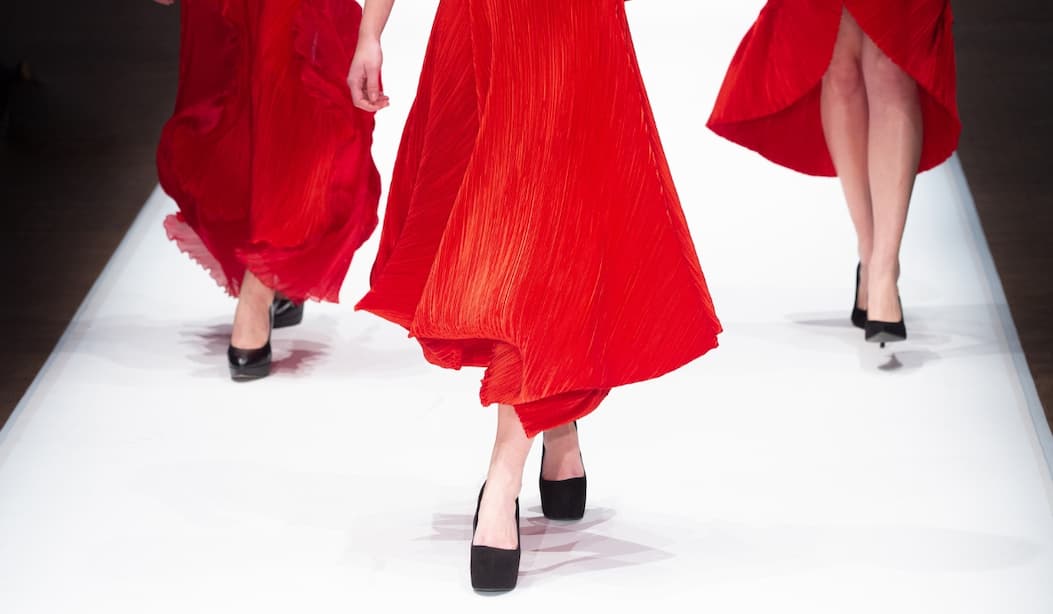
I’ve been told that I dress like someone who works from home, so needless to say, I don’t belong at New York Fashion Week and barely have the authority to write about it. So please take everything I’m about to say about fashion week with the understanding that I’m not exactly their target audience (though I still love following the runway looks, especially as more emerging brands prioritize sustainable design).
NYFW has been around since 1943, when a publicist named Eleanor Lambert basically willed American designers into relevance while Paris was busy fighting a war. It’s grown into a global spectacle presided over, at least in part, by Anna Wintour, who has kept her sunglasses on through four decades of runway shows, several documentaries, and at least one Anne Hathaway movie.
This year, there’s been some big news. The official NYFW schedule no longer permits farmed or trapped animal fur. The Council for Fashion Designers of America (CFDA) built the policy with Humane World for Animals and Collective Fashion Justice, and it covers mink, fox, rabbit, lamb, chinchilla, coyote, and raccoon. New York now joins London, Copenhagen and several other cities which dropped fur from their official calendars years ago. But did it even have an impact? The slightly awkward answer is not much on the runway. The CFDA said there was already little to no fur on the NYFW runway before the ban. Coach and Michael Kors moved away from fur years ago, so this is a less dramatic reversal and more American fashion formalizing a habit it already, mostly, had.
So if there’s no fur, what’s replacing it? Most fur alternatives are faux fur, which is mostly predominantly synthetic, meaning petroleum-based fibers that shed microplastics and definitely don’t biodegrade. A ban on animal cruelty is a huge win for me personally, but not always a win for the planet unless designers lean into the plant-based and bio-based options the CFDA is stocking in its new materials library. This is simply another reminder that “good for the planet” and “not made from an animal” are two separate claims. PETA and Collective Fashion Justice are already pushing the CFDA to extend the policy to exotic skins next, which the current rule doesn’t touch. I think you’re safe if your snakeskin stilettos are vintage, though.
Here are the brands doing something different:
Collina Strada took the show out of Manhattan entirely. Hillary Taymour staged her presentation at Storm King Art Center, 500 acres of sculpture park in the Hudson Valley, and used the collection to keep building out her partnership with TômTex, a Brooklyn biomaterials company making biodegradable, vegan leather-like accessories. I’m less interested in the fact that the show was in a sculpture park than I am in the fact that Collina Strada has been building sustainability into how it actually designs and sources. This is also a brand that’s been able to grow commercially while doing that, which is impressive. Super easy to make a sustainable brand when nobody is buying it.
Conner Ives finally got his official NYFW slot. He's one of ten new additions to the CFDA calendar this season, and his entire practice is built on upcycled and vintage material: found fabric, deadstock, secondhand American sportswear, reworked into pieces that read as directional rather than as a sustainability statement. That's the part worth noting. The CFDA choosing to elevate a designer whose sustainability is structural, not a capsule collection bolted onto a regular line, is a bigger institutional signal than any single brand's materials claim.
Coach celebrated it’s 85th anniversary this week. Presenting the night before NYFW officially opened, Coach continued building out Coachtopia, the sub-brand reworking, repairing, and repurposing existing leather into new pieces. A brand with eight decades of hides, patterns, and manufacturing relationships can run circularity at a scale and credibility that a newer label simply can't fake yet. Coach isn’t a leather-free brand, quite the opposite, but it’s at least thinking about what happens when you take the waste from that system and keep as much of it as possible in circulation.
Sabyasachi is showing high jewelry at NYFW today (September 15), every piece handcrafted in India by master goldsmiths and gemstone setters. It's a genuinely different argument: the most sustainable luxury object is the one made so well it never needs replacing. I'd push back gently on calling that "sustainable fashion" in the same breath as the other three, though. Craft and durability are real values, but they're not a materials footprint claim, and it's worth keeping those two things separate in your head even as the industry blends them into one press release.
And a moment for Stella McCartney, who has been doing this since before "sustainable fashion" was even a phrase anyone really used at dinner parties. She launched her label in 2001 with a rule that never bent: no leather, no fur, no exotic skins, full stop, even though every other luxury house on the calendar was built on precisely those materials. She's at London Fashion Week, not NYFW, but worth noting her incredible work while we’re on the topic of sustainable fashion. Twenty five years later, she's closing London Fashion Week with a collection that's 98 percent sustainable materials and 100 percent cruelty-free, and the receipts behind that number are genuinely wild:
- Mylo, a leather substitute grown from mushroom mycelium. MIRUM, a plastic-free leather alternative
- UPPEAL, made from apple waste
- VEGEA, made from grape skins left over from wine production. Kelsun, spun from seaweed
She's basically been running her own materials lab inside a fashion house for two and a half decades, and this season, Central Saint Martins made her its first industry ambassador for its new M School, meaning fashion students are now being trained directly on her playbook. The woman built an entire luxury brand around ingredients you'd find at a farmers market and somehow made it look like couture.
When reading about NYFW, I found the most interesting things happening were what makes the industry a little harder to categorize: designers working with what already exists, brands trying to keep materials in circulation, companies experimenting with alternatives, and people having arguments about what should count as ethical in the first place. The fact that sustainability is even discussed at fashion week is a huge win, so I want to celebrate that while still understanding that we have a long way to go.
Still, it’s impossible to ignore the elephant in the room: Fashion Week itself remains a cyclical marketing machine built to churn out "newness" twice a year. The spectacle directly fuels the ultra-fast fashion cycle. Within hours of a show, knockoff algorithms and micro-trend cycles rip off runway silhouettes, turning high-concept design into cheap, disposable polyester for mass consumption. Celebrating material progress at NYFW is important, but true sustainability will always be at odds with an industry calendar engineered to make last season's clothes feel obsolete.
Subscribe now to continue reading.
(16% discount)
• Access to unlimited articles
• Sustainable product guides & recommendations
• Weekly newsletters
Already a member? Log in.


%20Thumb%20for%20Eco-Gardens.jpg)
